Atlanta declares win now
Nikola Jokic, Dyson Daniels and LeBron James form an immediate-production trio. Its age curve makes later durability and usable depth especially important.
Startup Draft Edition · Independent league journalism
72 PICKS · 24 FRANCHISES · THREE ROUNDS
The opening board has produced contenders, patient rebuilds and everything between. Three rounds in, the league already contains sharply different ideas about age, availability, scarcity and the value of proven production.

Nikola Jokic, Dyson Daniels and LeBron James form an immediate-production trio. Its age curve makes later durability and usable depth especially important.
Alperen Sengun, Alex Sarr and Ausar Thompson offer size, defense and youth. It is the clearest unconventional build and our first Team to Watch.
The reversed Round 3 order let Detroit add Franz Wagner immediately after AJ Dybantsa. Seattle waited to 3.24, then finished with Jabari Smith Jr.
Three rounds cannot win a league. They can reveal what every manager believes wins one.
Round 1 bought franchise identity. Round 2 exposed risk appetite. Round 3 rewarded teams that understood reversal and roster shape.
Round 1 · anchors
Wembanyama, Jokic, Doncic and Flagg opened the board, followed by Gilgeous-Alexander and Cunningham. The first twelve picks largely secured primary engines. From Amen Thompson at 1.13 onward, the market widened: Tatum’s recovery, three 2026 rookies and veterans with different age curves forced managers to declare a window.
League scoring explains the preference for complete box scores. A steal or block is worth four; an assist is worth two; a turnover removes two. One-dimensional points are useful, but they do not dominate the format.
Round 2 · conviction
Dybantsa and Wilson began the round before Durant, Brunson and Randle restored veteran production. Kessler, Sarr, Clingan and Jackson were expensive because rim protection travels in this format. Miami’s Avdija at 2.11 and Sacramento’s Giddey at 2.12 landed after 40 FP/G seasons.
Houston’s Young, Atlanta’s Daniels and Seattle’s Booker closed the round with three very different guard bets: assists, defensive events and reliable scoring.
Round 3 · construction
Detroit paired Dybantsa with Wagner at 3.01. Chicago and Cleveland added established guards, while Golden State and Sacramento finished coherent trios with Ausar Thompson and Brown. At the turn, Atlanta selected LeBron and Seattle chose Smith.
The strongest Round 3 choices answered a roster question. The riskiest simply added more of what a team already owned.
The first 72 selections do not produce a standings table. They reveal how managers are pricing time, certainty and the categories that matter most in this format.
Atlanta and Oklahoma City invested heavily in veteran output. Their opening choices make present-day games and depth more useful than distant development bets.
Boston, Orlando, Golden State and Detroit mixed young players with at least one established NBA producer. The idea is to preserve upside without relying entirely on projection.
Brooklyn, Charlotte, the Lakers and Milwaukee accepted more uncertainty. Their next selections can either reinforce that patience or add a stable weekly floor.
Houston, Memphis and Toronto selected players whose healthy ceiling can swing matchups. Availability is part of the valuation, even when the per-game case remains attractive.
Golden State, Minnesota and Oklahoma City opened through size. Four-point blocks make that logical, but later rounds must still supply enough guard creation.
Seattle, Sacramento, Chicago and Dallas used different age mixes to cover several statistical paths. Balance after three picks creates options rather than guarantees.
The board is already readable without turning it into a league table.
Victor Wembanyama was the first player selected because his scoring profile combines star-level offense with the most valuable defensive event in the IDL formula.
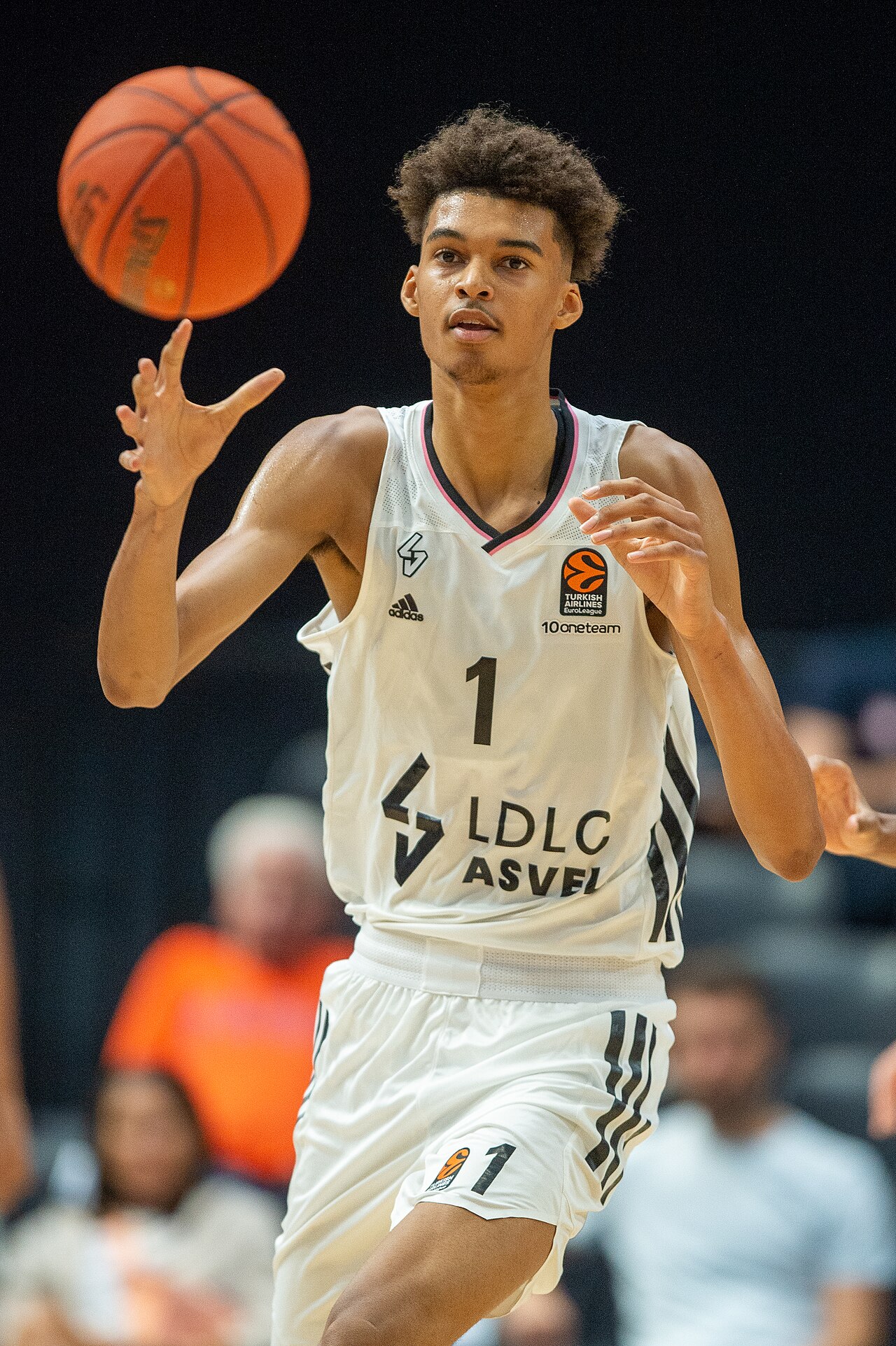
The scoring fit
Wembanyama recorded 55.41 FP/G in 2025–26. Because every block is worth four points, his defense can create fantasy production that most high-scoring guards cannot replicate.
The appeal is broader than one category: rebounds, shooting range and growing creation give Seattle several routes to value on the same night.
The roster around him
Devin Booker adds established perimeter scoring at 2.24, while Jabari Smith Jr. gives the trio another younger frontcourt player at 3.24.
Seattle’s next question is practical rather than philosophical: find assists and dependable minutes without duplicating the same frontcourt strengths.
This league does not reward a box score evenly. The format turns defensive events and efficient playmaking into draft-day currency.
Four-point events
Wembanyama, Holmgren, Jackson, Kessler, Sarr and Clingan gain structural value because a block is worth four points. A center averaging two blocks starts with eight fantasy points before scoring or rebounding.
Creation with a cost
Jokic and Haliburton are premium because they create efficiently. Doncic, Young, Cunningham, Giddey and Sabonis can build enormous assist totals, but ball security changes the gap between raw box-score fame and IDL value.
Shooting arithmetic
A made three contributes three real points, two for the field goal and one for the three, offset by the attempt. Misses hurt. That supports high-volume scorers who preserve efficiency and penalizes empty usage.
Recorded rates come from the supplied Zone Defense historical exports recalculated under the identical scoring formula. Those files are statistical evidence only; their rosters and strategy are not IDL evidence.
Major real-life transactions alter touches, teammates and durability assumptions behind several IDL selections.
Philadelphia
Jaylen Brown joined a group already built around Joel Embiid, Tyrese Maxey and VJ Edgecombe; LeBron later signed there as well. Brown remains proven, but Sacramento should model a wider usage range than last season’s Boston role. The same crowd affects Boston’s Edgecombe.
Washington
Trae Young and Anthony Davis now enter the same Wizards ecosystem. Houston still owns Young’s elite assist ceiling; Memphis still owns Davis’ two-way peak. Their fantasy teams must account for new teammates and, in Davis’ case, a 20-game 2025–26 sample.
Los Angeles
Kessler produced 40.60 FP/G in only five games before shoulder surgery. The Lakers paid heavily to acquire him and project him beside Doncic and Reaves. Toronto gets a format-perfect center with a clear role and a health question, not a five-game wonder declared solved.
Comeback desk
Haliburton missed 2025–26 after an Achilles tear and is scheduled to return. With Reaves and Sabonis, Indiana could become one of the league’s most productive passing teams if his comeback becomes reliable weekly production.
Every franchise receives the same evidence test: confirmed picks, IDL scoring fit, current role, health and competitive window. Teams appear in their original Round 1 draft order.
Balanced
Wembanyama supplies the rarest long-term anchor in the player pool. Booker stabilizes present scoring and Smith adds a younger frontcourt bet; the next need is assists without excessive turnovers.
Win now
Jokic, Daniels and LeBron form the strongest immediate three-man production case. The ceiling is obvious; the schedule, age curve and Daniels’ volatile steals output define the risk.
High variance
Doncic and Young can overwhelm the assist column, but both pay the league’s two-point turnover tax. Williamson makes the upside enormous and the availability range unusually wide.
Bridge build
Flagg and Murphy connect the present to the future. Davis can lift the trio into the weekly elite when active, though his 20-game 2025–26 sample makes depth a priority.
Two-way contender
Gilgeous-Alexander is the premium scoring base. Jackson and Bane add blocks and shooting, producing one of the cleanest three-player profiles without forcing a single category.
Young balance
Cunningham’s creation, Edgecombe’s upside and McDaniels’ defensive floor fit together. Philadelphia’s crowded star rotation could slow Edgecombe’s near-term volume.
Youth movement
Edwards provides proven star output while Buzelis and Fears preserve a long runway. The build needs rebounding and efficient assists more than another speculative scorer.
Recovery watch
Haliburton, Reaves and Sabonis would be an elite passing foundation at full strength. Haliburton’s return from a missed season makes early depth and insurance especially valuable.
Every franchise receives the same evidence test: confirmed picks, IDL scoring fit, current role, health and competitive window. Teams appear in their original Round 1 draft order.
Contender shape
Maxey and Siakam offer bankable offense; Alexander-Walker supplies lower-usage stability. A high-block center would amplify this scoring format.
Health hinge
Barnes fills every column and Kessler’s blocks are worth four, but Kessler logged only five games before shoulder surgery. Coward adds upside while increasing early uncertainty.
Frontcourt bet
Johnson, Clingan and Markkanen combine playmaking size, rim protection and shooting. The construction is coherent, though guard creation remains the next obvious requirement.
Team to Watch
Sengun, Sarr and Ausar Thompson are all young, productive and structurally complementary. Shooting and turnovers can decide whether the unusual size becomes a weekly advantage.
Balanced creator core
Amen Thompson and Giddey attack rebounds and assists; Brown provides proven scoring. Brown’s move into Philadelphia’s star-heavy rotation makes usage the live variable.
Patient contender
Tatum returned from an Achilles tear and produced in a 16-game regular-season sample. Avdija’s ascent and Okongwu’s interior efficiency give Miami a credible bridge through any workload caution.
Long horizon
Boozer and Knueppel are development assets while Edey supplies a current interior reference point. With two players lacking full NBA evidence, Brooklyn belongs in the projection-heavy tier for now.
Star plus youth
Giannis creates a weekly ceiling on his own. Duren and Rollins add younger production, while Giannis’ move to Miami makes his fit and health the important real-life variables.
Every franchise receives the same evidence test: confirmed picks, IDL scoring fit, current role, health and competitive window. Teams appear in their original Round 1 draft order.
Pure youth
Harper, Castle and Queen share a long timeline and real playmaking potential. The price is present volatility; reliable shooting and veteran games played should be next.
Prospect swing
Banchero is the proven engine. Peterson and Acuff give this trio major long-term creation upside but no 2025–26 NBA production baseline.
Balanced attack
Mitchell and Jalen Williams bring efficient creation, with Ware adding a young interior finisher. Williams’ selection at 2.06 aligns with one external expert view that placed him near the early second round.
Win-now guards
Ball, Randle and Murray can generate points immediately; Murray’s 46.64 FP/G was the trio’s best 2025–26 rate. Availability and overlapping ball needs deserve monitoring.
Complete foundation
Holmgren’s blocks, Brunson’s creation and Garland’s passing cover valuable categories. Health is the clearest path between a strong paper trio and actual weekly dominance.
Win-now watch
Towns, Durant and Adebayo form a powerful veteran frontcourt. The opening is productive and expensive in age; guard creation and durable depth now matter.
Developmental
Miller gives the trio an NBA scoring base, while Wilson and George push the bet toward growth. Wilson’s real-life fit beside Giddey and Buzelis should create finishing chances, but rookie volume is not guaranteed.
Dynasty riser
Mobley’s two-way floor gives Dybantsa time to develop, and Wagner adds proven wing creation. It is one of the strongest blends of rookie ceiling and established prime-age value.
These are editorial projections, not reports of manager intent. The next phase should expose how aggressively each team repairs the tradeoffs in its opening trio.
Houston, Memphis, Miami, Toronto and Indiana project to value stable games played more than the average team. If they keep buying peak outcomes, their weekly ceiling rises while the floor remains fragile.
Minnesota, Golden State and Oklahoma City opened with size. Their likeliest need is dependable guard creation; waiting too long risks paying for assists later.
Brooklyn, Charlotte, the Lakers and Milwaukee own long runways. A veteran with a secure rotation role would protect those plans from becoming entirely development-dependent.
The clearest contender should continue prioritizing current minutes and playoff-caliber production. A deep prospect detour would consume one of only 15 roster places without supporting the opening window.
Four-point blocks and steals can push defenders ahead of generic rankings. The next reach may be correct if the manager can explain the role, the minutes and the category scarcity.
Once 72 premium assets are distributed, managers can compare surplus against need. The first completed IDL trade will show whether the league prices youth, current FP/G or roster balance most aggressively.
The best next pick is rarely the best remaining name in a vacuum. It is the player who widens a roster’s paths without repeating its largest risk.
The complete confirmed record through Round 3. Round 3 uses the league’s reversal order.
| Pick | Franchise | Player |
|---|---|---|
| 1.01 | Seattle Sonics | Victor Wembanyama |
| 1.02 | Atlanta Hawks | Nikola Jokic |
| 1.03 | Houston Rockets | Luka Doncic |
| 1.04 | Memphis Grizzlies | Cooper Flagg |
| 1.05 | New York Knicks | Shai Gilgeous-Alexander |
| 1.06 | Boston Celtics | Cade Cunningham |
| 1.07 | Orlando Magic | Anthony Edwards |
| 1.08 | Indiana Pacers | Tyrese Haliburton |
| 1.09 | San Antonio Spurs | Tyrese Maxey |
| 1.10 | Toronto Raptors | Scottie Barnes |
| 1.11 | Minnesota Timberwolves | Jalen Johnson |
| 1.12 | Golden State Warriors | Alperen Sengun |
| 1.13 | Sacramento Kings | Amen Thompson |
| 1.14 | Miami Heat | Jayson Tatum |
| 1.15 | Brooklyn Nets | Cameron Boozer |
| 1.16 | Dallas Mavericks | Giannis Antetokounmpo |
| 1.17 | Charlotte Hornets | Dylan Harper |
| 1.18 | Los Angeles Lakers | Paolo Banchero |
| 1.19 | Los Angeles Clippers | Donovan Mitchell |
| 1.20 | Cleveland Cavaliers | LaMelo Ball |
| 1.21 | Chicago Bulls | Chet Holmgren |
| 1.22 | Oklahoma City Thunder | Karl-Anthony Towns |
| 1.23 | Milwaukee Bucks | Brandon Miller |
| 1.24 | Detroit Pistons | Evan Mobley |
| Pick | Franchise | Player |
|---|---|---|
| 2.01 | Detroit Pistons | AJ Dybantsa |
| 2.02 | Milwaukee Bucks | Caleb Wilson |
| 2.03 | Oklahoma City Thunder | Kevin Durant |
| 2.04 | Chicago Bulls | Jalen Brunson |
| 2.05 | Cleveland Cavaliers | Julius Randle |
| 2.06 | Los Angeles Clippers | Jalen Williams |
| 2.07 | Los Angeles Lakers | Darryn Peterson |
| 2.08 | Charlotte Hornets | Stephon Castle |
| 2.09 | Dallas Mavericks | Jalen Duren |
| 2.10 | Brooklyn Nets | Kon Knueppel |
| 2.11 | Miami Heat | Deni Avdija |
| 2.12 | Sacramento Kings | Josh Giddey |
| 2.13 | Golden State Warriors | Alex Sarr |
| 2.14 | Minnesota Timberwolves | Donovan Clingan |
| 2.15 | Toronto Raptors | Walker Kessler |
| 2.16 | San Antonio Spurs | Pascal Siakam |
| 2.17 | Indiana Pacers | Austin Reaves |
| 2.18 | Orlando Magic | Matas Buzelis |
| 2.19 | Boston Celtics | VJ Edgecombe |
| 2.20 | New York Knicks | Jaren Jackson Jr. |
| 2.21 | Memphis Grizzlies | Trey Murphy III |
| 2.22 | Houston Rockets | Trae Young |
| 2.23 | Atlanta Hawks | Dyson Daniels |
| 2.24 | Seattle Sonics | Devin Booker |
| Pick | Franchise | Player |
|---|---|---|
| 3.01 | Detroit Pistons | Franz Wagner |
| 3.02 | Milwaukee Bucks | Keyonte George |
| 3.03 | Oklahoma City Thunder | Bam Adebayo |
| 3.04 | Chicago Bulls | Darius Garland |
| 3.05 | Cleveland Cavaliers | Jamal Murray |
| 3.06 | Los Angeles Clippers | Kel'el Ware |
| 3.07 | Los Angeles Lakers | Darius Acuff Jr. |
| 3.08 | Charlotte Hornets | Derik Queen |
| 3.09 | Dallas Mavericks | Ryan Rollins |
| 3.10 | Brooklyn Nets | Zach Edey |
| 3.11 | Miami Heat | Onyeka Okongwu |
| 3.12 | Sacramento Kings | Jaylen Brown |
| 3.13 | Golden State Warriors | Ausar Thompson |
| 3.14 | Minnesota Timberwolves | Lauri Markkanen |
| 3.15 | Toronto Raptors | Cedric Coward |
| 3.16 | San Antonio Spurs | Nickeil Alexander-Walker |
| 3.17 | Indiana Pacers | Domantas Sabonis |
| 3.18 | Orlando Magic | Jeremiah Fears |
| 3.19 | Boston Celtics | Jaden McDaniels |
| 3.20 | New York Knicks | Desmond Bane |
| 3.21 | Memphis Grizzlies | Anthony Davis |
| 3.22 | Houston Rockets | Zion Williamson |
| 3.23 | Atlanta Hawks | LeBron James |
| 3.24 | Seattle Sonics | Jabari Smith Jr. |
Independence
The Dynasty Weekly is an independent league publication. The commissioner also manages Brooklyn, which received the same criteria, space and scrutiny as every franchise. Features were selected for evidence and news value.
The team capsules are descriptive snapshots after three rounds. They explain construction, scoring fit and risk without turning an unfinished draft into a standings table.
Private evaluation
Private dynasty rankings informed selected value discussions. Their brands are intentionally not published. A single ranking is described as one external expert view; it is never promoted into a consensus.
Data note
2025–26 FP/G and total production were derived from the commissioner-supplied historical export using the IDL formula. Five 2026 rookies had no NBA record in that dataset and were not assigned invented fantasy production.
Current NBA team and role context was checked against official league and team reporting available at publication.
If a confirmed pick or published statistic is wrong, the web edition will be corrected and the material revision dated. Forecast disagreements are part of analysis; factual errors are not.
THE DYNASTY WEEKLY · ISSUE NO. 1 · STARTUP DRAFT EDITION